|
×
登录
|
|
|
|
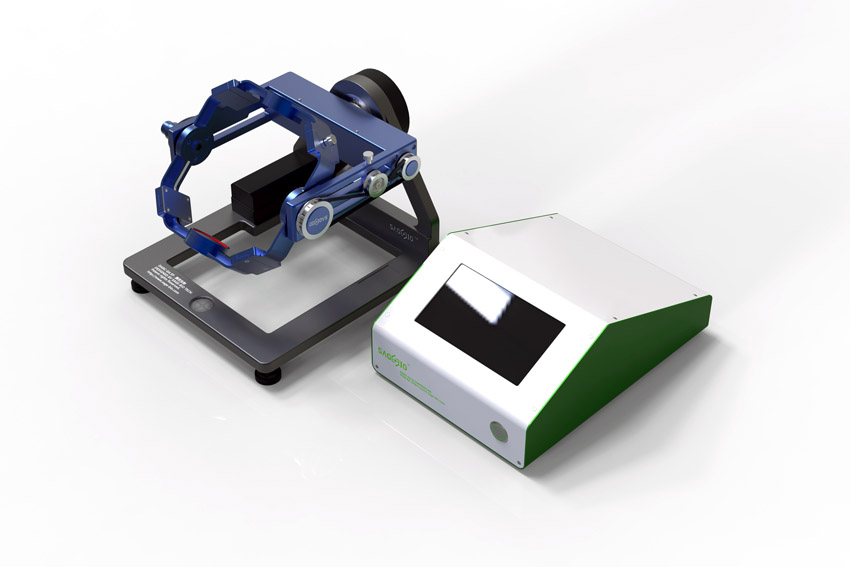
DARC-G4.5升级版随机定位仪\可视化微重力模拟培养系统 型号: DARC-G4.5P | 价格: 请联系我们详询,谢谢!

攸寻医疗科技科技欢迎您留言 ... ... 为及时与您取得联系并回复您的关注,请务必输入您的姓名、咨询内容及有效的联系电话等,谢谢!
仅作联络之用,我司承诺保密,敬请放心填写!
会员提交咨询后,可登录网站进入“会员中心 - 我的咨询”查看管理员的回复内容;非会员提交的咨询,回复内容不会在前台公开显示。
留言加载中...
|
图片展示
| DARC-G4.5P最新版本 | 内置高精度万向水平仪 | DARC-G4.5P全新外观 |
产品概述
DARC-G4.5P 是赛吉生物全新的、可视化三维重力模拟培养系统(随机定位仪RPM),硬件设计遵循 GB/T 1800.1-2020、GB/T 1800.2-2020 尺寸公差国标,双轴主轴采用 H7/g6 精密间隙配合;回转精度依据 GB/T 17421.1 仪器几何精度标准管控,主轴端部径向跳动≤0.01mm(10μm),旋转偏心量低,保障 0.001g微重力、超重力模拟输出稳定。设备核心组件采用全密封防潮结构,完成 37℃恒温高湿环境满载耐久性测试,连续无故障稳定运行 达90 天以上,自身发热量极低,不会对培养箱内温度稳定造成干扰,可长期放置 CO₂培养箱开展长周期微重力效应模拟实验。
DARC-G4.5P 搭载专属培养容器在线巡航拍照模组,可对常规培养瓶、培养皿开展定点培养腔体原位分时成像,无需开盖取样,无扰动完整记录细胞球、类器官生长全过程;配套合规加密云端服务,成像原图、重力参数、运行日志等数据可实时自动云端备份,手机、电脑多终端远程查看、调取影像与实验曲线,分级账户全程留痕,满足 GMP/GLP 数据溯源规范。
我们配套开发了多款专用于3D动态环境培养培养容器,如 SG-RWV、SG-BSV、SG-NSV 专用培养容器,相较传统培养瓶、培养皿优势显著:球形腔体优化流体流场,SG-NSV 可消除湍流、构建极低剪切力环境;容量覆盖 1ml–1350ml,所有培养容器内置大面积换气膜,确保充分的气体交换。DARC-G4.5P是一个里程碑式的产品,它从科学的结构设计、精密机械加工、首创的原位成像、云端远程管控、长效稳定运行等多方面将地面三维回转微重力模拟系统(即随机定位仪RPM)推到了一个更高的高度,无论从功能、易用性以及配套解决方案、创新型等方面,均已达到甚至超越全球同类产品,并将带给您不一样的使用体验,为您的微重力模拟实验保驾护航。
DARC-G4.5P is a brand-new visual 3D simulated gravity culture system (Random Positioning Machine, RPM) developed by Saiji Biotech. Its hardware design complies with national dimensional tolerance standards GB/T 1800.1-2020 and GB/T 1800.2-2020. The dual-axis main spindle adopts precision clearance fit of H7/g6 grade.
Rotational precision is controlled in line with GB/T 17421.1, the national standard for geometric accuracy of instruments. Radial runout at the spindle end is limited to ≤0.01 mm (10 μm), delivering minimal rotational eccentricity to sustain stable output for simulating microgravity down to 0.001 g and hypergravity conditions.
All core components of the equipment feature fully sealed moisture-proof construction. It has passed full-load durability testing under constant 37 °C high-humidity conditions, supporting continuous trouble-free operation for over 90 days. The unit generates negligible self-heat and will not disrupt temperature stability inside incubators, allowing long-term placement inside CO₂ incubators for extended experiments on microgravity biological effects.
The DARC-G4.5P is integrated with a dedicated in-line cruise imaging module for culture vessels. It enables time-lapse in-situ imaging at fixed positions within standard culture flasks and petri dishes. No sampling or lid opening is required, enabling undisturbed full documentation of spheroid and organoid development over time.
A compliant encrypted cloud service is bundled with the system. Raw imaging files, gravity parameters, operational logs and other experimental data are automatically backed up to the cloud in real time. Users can remotely access images and experimental curves via mobile phones, laptops or desktops. Multi-level user accounts record all operational traces end-to-end, fully meeting data traceability requirements under GMP and GLP guidelines.
We have engineered a series of custom vessels tailored for 3D dynamic culture, including SG-RWV, SG-BSV and SG-NSV models, which outperform conventional flasks and petri dishes in multiple key aspects. The spherical chamber design optimizes internal fluid flow patterns; the SG-NSV model eliminates turbulent flow to create an ultra-low shear stress environment. Vessel volumes range from 1 mL to 1350 mL, and all custom vessels are fitted with large-area gas-permeable membranes to facilitate sufficient gas exchange.
As a landmark product, the DARC-G4.5P elevates ground-based 3D clinostat/RPM microgravity simulation platforms to an unprecedented level through scientifically optimized mechanical architecture, ultra-precise machining, original in-situ live imaging, cloud-based remote monitoring and long-duration stable operation. In terms of functionality, user-friendliness, integrated supporting solutions and technological innovation, its performance matches or surpasses equivalent systems worldwide. It delivers a distinctive operational experience and provides reliable support for all your microgravity simulation research.
优势介绍
DARC-G4.5P 为赛吉生物全新涉及的三维动态回转、微重力效应模拟培养系统(RPM随机定位仪),产品设计、加工遵循 GB/T 1800.1-2020 公差国标,双轴主轴采用 H7/g6 精密间隙配合,依据 GB/T 17421.1 仪器精度标准管控,主轴端部径向跳动≤0.01mm,回转平稳稳定。整机传动电控全密封防潮,通过 37℃恒温高湿满载 90 天无故障耐久性测试,可长期置于 CO₂培养箱开展长周期三维培养。设备搭载专属培养容器在线巡航拍照模组,单独对各 SG 系列腔体定点分时成像,无需开盖,全程无扰动记录细胞球、类器官发育过程。配套加密云端服务,成像原图、重力参数、运行日志自动云端存储,手机、电脑多终端远程查看、导出数据,分级账户管理满足 GMP/GLP 溯源规范。搭配 SG-RWV、SG-BSV、SG-NSV 系列专用培养容器,相比传统培养瓶、皿可构建超低湍流、低剪切力仿生流场,容积覆盖 1ml-1350ml,区分悬浮 / 贴壁型号,支持 121℃湿热灭菌,适配 pH4.0-9.0 全体系,实现高精度重力调控、原位可视化、云端远程管控、长效稳定运行一体化科研方案。
DARC-G4.5P 主要优势:
1、精密回转系统,主轴采用国标 H7/g6 精密配合,径向跳动≤0.01mm,旋转偏心误差小,保障 10⁻³g微重力效应稳定,实验重复性强。
2、长效稳定运行,核心部件全密封防潮防护,37℃恒温高湿环境满载连续 90 天无故障,适配超长周期干细胞、类器官培养。
3、容器巡航成像,独立针对每支培养腔体定点拍照,无需开盖取样,规避污染,完整留存细胞三维生长时序影像。
4、云端数据管控,配套加密云存储空间,影像、运行参数自动备份,多终端远程调取、查看,分级账户满足合规溯源要求。
5、专用耗材体系,SG 系列培养容器优化流体流场,SG-NSV 消除湍流、超低剪切力,容积全覆盖,分悬浮 / 贴壁专用款,耐高温灭菌。
6、免工具切换各类适配器,兼容 T25 瓶、培养皿、EP 管等,可模拟月球、火星重力,覆盖航天医学、肿瘤、药物筛选多领域。
7、极低的自然热,设备自身发热量极低,长期在CO2培养箱内工作也不会扰乱箱内温度。
8、三维运动轨迹、加速度变化一键导出,便于后期数据分析、引用。
9、全新的微重力模拟算法提供稳定提供单一性微重力模拟输出,输出过程无反弹,确保模拟微重力效应水平持续、稳定,并能够更快达到0.001g微重力模拟水平。
应用场景
DARC-G4.5P 微重力效应模拟系统依托 10⁻³g~6g 宽幅重力调控、容器在线巡航成像、云端数据归档与低剪切力专用耗材体系,成为重力生物学、航天医学、再生医学交叉领域核心科研平台。设备可模拟月球、火星低重力及 1~6g 超重力工况,搭配 SG 系列专用培养容器构建仿生三维流体环境,规避传统培养瓶、皿带来的高剪切、细胞沉降、球体坏死等缺陷。整机支持 37℃高湿环境长周期连续稳定培养,原位巡航拍照搭配加密云端存储,全程无扰动记录细胞球、类器官时序发育数据,数据可溯源,契合 GMP/GLP 科研合规要求。可广泛用于空间生理损伤机制解析、肿瘤转移与耐药研究、神经退行性疾病体外建模、干细胞干性维持、高通量抗癌药物筛选、骨与血管组织工程、空间站微生物防控、行星重力生命响应等前沿课题,弥补二维静态培养与体内力学微环境脱节短板,为地面模拟失重、超重相关基础与转化医学研究提供一体化实验解决方案。
DARC-G4.5P主要应用场景(但不限于):
1、航天医学与深空生命研究,模拟月球、火星重力与太空微重力,解析宇航员骨质流失、肌肉萎缩、心血管损伤、免疫抑制细胞分子机制,开发太空防护干预方案。
2、肿瘤生物学与抗肿瘤药物筛选,构建三维肿瘤球模型,研究微重力调控肿瘤迁移、凋亡、周期蛋白表达规律,开展耐药机制、抗癌药敏感性高通量测试,降低临床前筛选假阳性。
3、神经退行性疾病体外建模,利用微重力诱导 α- 突触核蛋白聚集、氧化应激,搭建帕金森病体外病理模型,挖掘神经毒性通路与新药靶点。
4、干细胞与再生医学研究,三维动态培养维持间充质干细胞干性,调控心肌、成骨细胞定向分化,提升干细胞免疫调节能力,为骨修复、血管再生提供高质量种子细胞。
5、组织工程与类器官培养,依托 SG-BSV 球形低湍流腔体,培育脑、肝、肠道类器官,动态力学刺激促进细胞外基质沉积,实现血管化仿生组织构建。
6、高精度个性化药物评价平台,结合 3D 细胞与变重力环境复刻体内代谢特征,精准评估药物靶点响应,支撑个性化肿瘤治疗方案研发。
7、空间微生物耐药与防控研究,探究微重力对微生物代谢、生物膜形成、耐药基因表达的影响,为空间站微生物风险防控、新型抗生素研发提供实验支撑。
8、超重力细胞力学基础研究,通过 2~6g 可控超重力工况,解析细胞膜张力、流体静压、基因表达耦合机制,揭示超重环境下细胞命运调控规律。
The DARC-G4.5P microgravity simulation system serves as a core research platform spanning gravitational biology, aerospace medicine and regenerative medicine, featuring wide-range gravity modulation from 10⁻³ g to 6 g, in-vessel cruise imaging, cloud-based data archiving and a full lineup of low-shear consumables.
Capable of simulating lunar and Martian low gravity, as well as hypergravity conditions ranging from 1 g to 6 g, the system pairs with SG-series dedicated culture vessels to form biomimetic 3D fluid environments, eliminating drawbacks of conventional culture flasks and dishes such as excessive shear stress, cell sedimentation and spheroid necrosis. The instrument enables long-term uninterrupted stable cell culture under 37 °C high-humidity conditions. Combined with in-situ cruise imaging and encrypted cloud storage, it captures time-series developmental data of cell spheroids and organoids without disrupting samples. All data is fully traceable, complying with GMP and GLP research compliance standards.
The system is widely applied in cutting-edge research areas including the mechanistic analysis of space-induced physiological damage, tumor metastasis and drug resistance assays, in-vitro modeling of neurodegenerative disorders, stem cell pluripotency maintenance, high-throughput anti-cancer drug screening, bone and vascular tissue engineering, microbial control for space stations, and biological responses under planetary gravity. It addresses the disconnect between static 2D culture and in-vivo mechanical microenvironments, delivering an all-in-one experimental solution for fundamental and translational research on ground-simulated weightlessness and hypergravity.
Primary Application Scenarios of DARC-G4.5P (Non-exhaustive List)
Aerospace Medicine and Deep Space Life Science
Simulate lunar, Martian and space microgravity to uncover cellular and molecular mechanisms behind astronaut bone loss, muscle atrophy, cardiovascular impairment and immune suppression, and develop countermeasures for spaceflight-related health risks.
Tumor Biology and Anti-Tumor Drug Screening
Generate 3D tumor spheroid models to investigate how microgravity regulates tumor migration, apoptosis and cyclin expression. Conduct high-throughput assays for drug resistance and anti-cancer compound sensitivity to reduce false positive rates in preclinical screening.
In-Vitro Modeling of Neurodegenerative Diseases
Induce α-synuclein aggregation and oxidative stress via microgravity to establish in-vitro pathological models of Parkinson’s disease, facilitating the identification of neurotoxic signaling pathways and novel drug targets.
Stem Cell and Regenerative Medicine Research
Preserve the pluripotency of mesenchymal stem cells through dynamic 3D culture, modulate directed differentiation of cardiomyocytes and osteoblasts, and enhance the immunomodulatory capacity of stem cells to generate high-quality seed cells for bone repair and vascular regeneration.
Tissue Engineering and Organoid Culture
Leverage the low-turbulence spherical chambers of SG-BSV vessels to cultivate brain, liver and intestinal organoids. Dynamic mechanical stimulation boosts extracellular matrix deposition and supports the fabrication of vascularized biomimetic tissues.
High-Precision Personalized Drug Evaluation Platform
Replicate in-vivo metabolic profiles by integrating 3D cell cultures with variable gravity environments, enabling precise assessment of target drug responses to support the development of personalized tumor therapy regimens.
Space Microbial Drug Resistance and Control Research
Explore how microgravity alters microbial metabolism, biofilm formation and resistance gene expression, providing experimental evidence for space station microbial hazard management and new antibiotic development.
Fundamental Research on Cellular Mechanics Under Hypergravity
Utilize tunable 2–6 g hypergravity conditions to dissect coupling mechanisms among cell membrane tension, hydrostatic pressure and gene expression, and clarify the regulatory patterns governing cell fate under hypergravity.
常见问答
Q:苏州赛吉生物是否通过 ISO9001 质量管理体系认证?
A:公司已完整通过 ISO9001 质量管理体系认证,DARC-G4.5P 从研发、加工、装配到出厂全流程按体系标准管控,出厂均经过多轮稳定性与精度校验,可提供全套认证资质文件,满足高校、药企 GMP/GLP 合规审核需求。
Q:DARC-G4.5P 主轴采用什么配合标准,回转精度指标是多少?
A:主轴配合遵循 GB/T 1800.1-2020 国标 H7/g6 精密间隙配合,回转精度依据 GB/T 17421.1 仪器几何精度标准管控,主轴端部径向跳动≤0.01mm,旋转偏心量低,重力输出稳定,实验重复性更强。
Q:设备可以长期放置 CO₂培养箱高湿环境连续运行吗?耐久性测试标准如何?
A:设备传动、电控核心部件采用全密封防潮结构,完成 37℃恒温高湿满载耐久性测试,可无故障连续稳定运行 90 天以上,适配干细胞、类器官等超长周期三维培养实验。
Q:DARC-G4.5P 巡航拍照功能是拍整机还是单独拍摄各培养容器?优势是什么?
A:搭载专属培养容器在线巡航拍照模组,可定点、分时单独对每一个培养腔体(培养瓶或培养皿)原位成像,排的时培养容器内部(并非简单的看到设备是否在动),无需开盖取样,全程无扰动记录细胞球、类器官时序生长状态,规避开盖污染与细胞生长干扰。
Q:设备配套云端远程服务包含哪些功能?数据安全性如何?
A:配套企业加密合规云端服务,成像原图、重力运行参数、设备日志自动实时云端备份;手机、电脑多终端远程查看、下载影像与实验曲线,分级账户权限管理,数据全程留痕可溯源,契合 GLP、GMP 数据管理规范。
Q:配套 SG 系列专用培养容器,对比传统培养瓶、培养皿有哪些核心优势?
A:SG-BSV 球形腔体优化流体流场,SG-NSV 零剪切力容器消除培养液湍流;容积覆盖 1ml–1350ml,区分悬浮、贴壁专用型号;全部支持 121℃湿热灭菌,耐受 pH4.0–9.0 体系,大幅降低细胞凋亡、球体中心坏死概率。
Q:设备重力模拟范围是多少,能否模拟月球、火星重力?
A:重力调控区间 10⁻³g~6g,内置月球 0.17g、火星 0.38g 预设重力模式,同时支持 1–6g 手动自定义超重力,可覆盖深空生物、超重细胞力学全维度研究需求。
Q:适配器更换是否复杂,兼容哪些常规实验室耗材?
A:模块化免工具适配器,切换时长低于 3 分钟;可兼容 T25 培养瓶、EP 管、培养皿等,另有高低温定制适配器可选,高通量同步开展多组对照实验。
Q:设备适用哪些主流科研方向,能否用于药物筛选、航天医学课题?
A:适配多种主流科研场景,包含航天深空医学、肿瘤转移与耐药研究、神经退行性疾病建模、干细胞再生医学、类器官构建、高通量抗癌药物筛选、组织工程、空间微生物研究,是重力生物学一体化实验平台。
Q:整机质保多久,是否提供上门安装、实验方案指导服务?
A:整机标准质保 1 年,到货提供上门安装调试、免费实操培训;售前提供课题匹配方案设计,售后配备专属技术专员,长期提供实验技术咨询、设备校准与耗材配套支持。
Q:DARC-G4.5P 与同类国外同类设备相比,在微重力模拟功能上有什么优点?
A:DARC-G4.5P采用全新的微重力闭环模拟控制算法,解决传统双轴回转设备重力输出波动问题,市场同类设备在下调重力过程中数值易反复震荡来回偏移,本DARC-G4.5P可实现重力值从标准 1g 平稳线性下行,全程曲线平滑无反弹、低波动,持续输出高度均一稳定的微重力模拟环境,微重力效应维持恒定,大幅提升长周期细胞、类器官实验的数据重复性与可信度。
关键字: 微重力,可视化,巡航拍照,原位成像,云端服务,远程控制,DARC-G4.5P,0.001g

DARC-G通用重力环境模拟系统是第一台上市销售的国产二轴3D回转细胞培养系统,是首个采用可更换模块设计的二轴3D回转细胞培养系统。针对DARC-G通用重力环境模拟系统,我们开发了数十款不同适配器、生物反应容器以满足不同场景的需求,帮助用户更便捷、更高效地开展各种科研实验。DARC-G通用重力环境模拟系统配合不同模块可用于基于微重力、超重力环境下的生命科学、材料科学、新能源等研究工作。DARC-G

DARC-G通用重力环境模拟系统是第一台上市销售的国产二轴3D回转细胞培养系统,是首个采用可更换模块设计的二轴3D回转细胞培养系统。针对DARC-G通用重力环境模拟系统,我们开发了数十款不同适配器、生物反应容器以满足不同场景的需求,帮助用户更便捷、更高效地开展各种科研实验。DARC-G通用重力环境模拟系统配合不同模块可用于基于微重力、超重力环境

DARC-G通用重力环境模拟系统是第一台上市销售的国产二轴3D回转细胞培养系统,是首个采用可更换模块设计的二轴3D回转细胞培养系统。针对DARC-G通用重力环境模拟系统,我们开发了数十款不同适配器、生物反应容器以满足不同场景的需求,帮助用户更便捷、更高效地开展各种科研实验。DARC-G通用重力环境模拟系统配合不同模块可用于基于微重力、超重力环境下的生命科学、材料科学、新能源等研究工作。DARC-G